Kermit
Melanoma
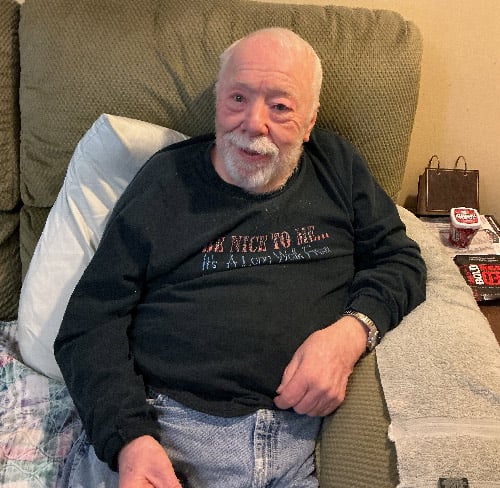
Kermit
Melanoma
In 2017, Kermit—now 82 and living in Maryville, Tennessee—noticed a small spot on his neck, about the size of an eraser. At his wife Linda’s urging, he scheduled a visit with his dermatologist. The biopsy from the dermatologist revealed melanoma, and Kermit was quickly referred to a surgeon to remove the cancer.
But the following spring, another lump appeared near the same spot. Tests showed the melanoma had spread to his lymph nodes and salivary gland. After additional surgery, Kermit began an immunotherapy treatment but his cancer continued to spread and was found in his lungs, liver, spine, and three spots in his brain.
Despite the diagnosis, Kermit felt strong and healthy. He was referred to Meredith McKean, MD, MPH, Director of Melanoma and Skin Cancer Research at SCRI and medical oncologist at SCRI Oncology Partners for a clinical trial in April of 2019.
“Dr. McKean identified a clinical trial at SCRI that combined two drugs: one to help his immune system recognize the cancer and another to strip away the “camouflage” that allowed the cancer to hide. Dr. McKean was amazing – we could not have asked for a better doctor,” said Kermit’s wife, Linda.
Kermit tolerated the treatment well, with no significant side effects. For nearly two years, Kermit traveled to Nashville every two weeks for treatment and even had a lesion removed from his brain during this time.
He saw great improvements while on the clinical trial but in late 2020, complications from a prior prostate cancer radiation caused bladder bleeding, requiring hospitalization and hyperbaric therapy, forcing him to pause his treatment. After recovering, Kermit returned to Dr. McKean in August 2021 to continue his clinical trial medication in March 2022.
Nearly four years later, Kermit continues to have no evidence of cancer. His scans remain clear, and he now checks in with Dr. McKean every six months for monitoring.
He spends his time enjoying life—watching his seven grandchildren play football and soccer, and perform in orchestra concerts. He’s even able to travel all the way to Alaska to visit his family.
Reflecting on his journey, Kermit shares: “The people at Sarah Cannon Research Institute were absolutely wonderful. Everyone we met truly cared. Dr. McKean was always upbeat and encouraging—you couldn’t ask for a better doctor.”