Understanding Cancer Clinical Trials
Through Sarah Cannon Research Institute (SCRI), people facing cancer have access to hundreds of clinical trials in communities across the United States. SCRI provides clinical trials where the majority of people with cancer seek treatment, close to home.
SCRI has contributed to pivotal research that has led to the majority of new cancer therapies approved by the U.S. Food and Drug Administration (FDA) in the past decade.

What is a clinical trial?
A clinical trial is a medical research study. Cancer clinical trials are specifically designed to answer specific scientific questions that can improve the treatment and care of people with cancer. Trials are conducted for a variety of reasons, including to:
- Test new and better ways to prevent, screen, diagnose or treat cancer
- Test an existing cancer treatment on a different type of cancer
- Determine if an investigational therapy or procedure is more effective in treating a particular type of cancer than an
existing therapy or procedure - Understand how to use approved treatments in new combinations for better results
Clinical trials rely on volunteers, referred to as study participants. Every study participant is closely monitored with medical tests and exams before, during and after the clinical trial. Safety is always a top priority, and clinical trials are strictly managed by the FDA. Before a therapy is approved for testing in humans, the FDA ensures that it has gone through strict testing protocols.
Why should I participate in a clinical trial?
Participating in scientific research through a clinical trial has numerous benefits for you. It can:
- Provide access to the latest treatment options that are being explored
- Allow a more active role in your care
- Contribute to medical knowledge and progress against cancer, which can improve care for patients overall
Today, it is easier than ever to find a clinical trial close to home. Depending on the type of clinical trial you seek, you may have options available in your own community. Explore clinical trials available through SCRI—search by disease type and zip code to find options near you.
Why are cancer clinical trials important?
Today’s clinical trials result in tomorrow’s treatment options. All of the standard cancer treatments used today are based on previous clinical trial results.
Cancer clinical trials are important because they:
- Provide patients with access to the latest treatment options that are being explored
- Help patients contribute to medical knowledge and progress against cancer, which can improve care
- Provide critical data that can ultimately lead to new FDA-approved therapies for patients that are more effective and/or better tolerated than current treatments
Other benefits of participating in a clinical trial include:
Accessing Personalized Medicine
Clinical trials often utilize personalized medicine, which looks at a patient’s specific genetic mutations, markers or DNA sequencing to inform a treatment approach. Participating in a clinical trial may be the only way for you to get access to personalized medicine therapies.
Helping Advance Science
Clinical trials are essential for making progress toward cures for cancer. Your participation can lead to the FDA approval of new and improved treatments that can help people with cancer in the future.
Careful Monitoring
Requirements for clinical trials are strictly managed by the FDA. Before an investigational treatment is approved for testing in humans, the FDA ensures it has gone through strict testing protocols in preclinical studies (typically in laboratory animals). Because the investigational treatment is being carefully studied, patients are carefully monitored by healthcare professionals to see how they are doing and to watch for side effects. You will be carefully monitored throughout the trial. You also will likely have better connectivity with your care team than patients with cancer not enrolled in a clinical trial.
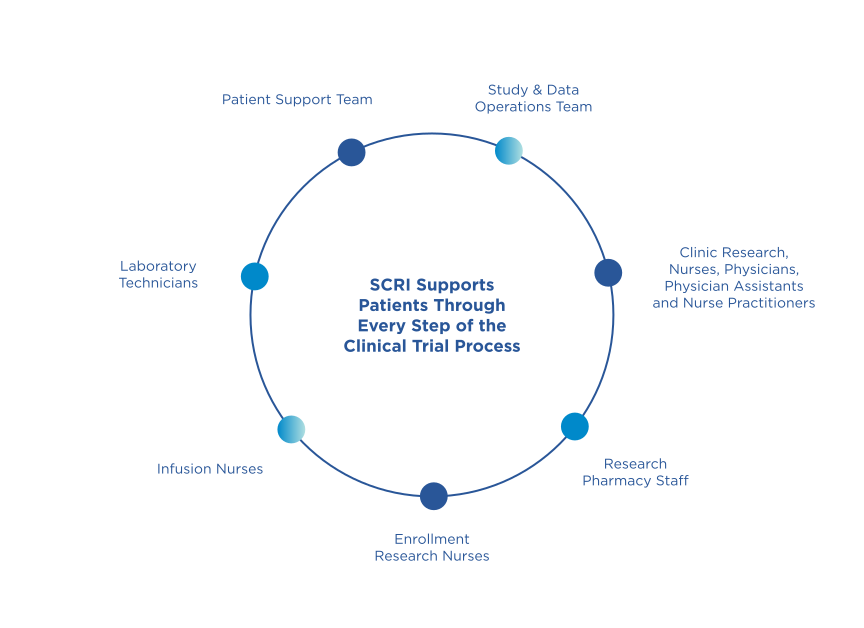
What should I do if I want to consider participating in a clinical trial?
If you are interested in a clinical trial, you should talk to your care team about setting up a meeting with a research coordinator or study investigator to learn as much as possible about the study.
How should I prepare for a meeting with the research coordinator or study investigator?
There is a lot to learn regarding clinical trials. To ensure that you gather all the necessary information, you should come prepared with a list of possible questions to ask about the study, including its purpose, the procedures involved and any expenses you’ll have. You might also want to bring a device that can record the discussion. Additionally, consider asking a friend or relative to join you for support and to hear the responses to the questions.
Do I have to participate in a clinical trial?
No. Your participation in a clinical trial is completely voluntary at all times.
Will I continue working with my primary care team and/or oncologist?
Yes. Most clinical trials do not provide complete primary healthcare so you would still see your primary care physician, oncologist etc. Maintaining a relationship with your oncologist is important for continuity of care.
What if the investigational treatment in the trial does not seem to be working for me?
Clinical trials ensure you receive care as good as, or more effective than, the standard of care.
Can I leave a clinical trial after it has begun?
Yes. Cancer research participation is strictly voluntary. Participants may withdraw their decision to participate at any time for any reason. When withdrawing from the clinical trial, you should let the research team know about it and the reasons for leaving the study.
What happens after the clinical trial ends?
After the study treatment is complete, participants will continue to be followed for months or even years for health updates. If the participant changes to another care team, the research staff may contact the participant via phone.
All information collected is analyzed to help determine the investigational treatment’s safety, side effects and effectiveness. FDA medical advisors and specialists closely review this data before considering any new therapy for approval. Once a treatment is approved, studies continue to compare the new option with other therapies already on the market. Other studies may research whether the treatment can be administered to a new patient population, its long-term effectiveness and its impact on patient quality of life.
What should I expect if I decide to participate in a clinical trial?
If you qualify for a trial, your care team will provide you with all applicable information. They will tell you, in a process called informed consent, how the trial will be conducted and the possible risks and benefits of participating in the trial. You will then sign a document stating that you understand the details of the trial and that you are willing to participate. Even after signing the document of informed consent, you may withdraw from the trial at any time for any reason.
How are my rights protected if I enroll in a clinical trial?
Clinical trials are conducted according to strict scientific and ethical principles, and groups of experts at the national and local levels approve research studies before they begin. One important group that evaluates clinical trials is the Institutional Review Board (IRB) of the research organization implementing the trial. An IRB is made up of doctors, researchers, community leaders and other members of the community. The IRB is focused on protecting the safety of study participants by reviewing the protocol to make sure the study is conducted fairly, and participants are well-informed of their rights during the study.
What are the risks of participating in a clinical trial?
Through the process of informed consent, your medical team will make sure you understand all the possible risks and benefits. Because clinical trials typically test investigational treatments, side effects and its effectiveness against the cancer may be unknown. Since risks vary in each individual situation, it’s important to talk with your medical team to understand the specific risks related to any clinical trial you may be considering.
Who pays for clinical trials?
Two types of costs are associated with a clinical trial: patient care costs and research costs.
- Patient care costs are those costs related to treating your cancer, whether you are in a trial or receiving standard of care. These costs are often covered by health insurance and usual copays and coinsurance would apply. Doctor visits, hospital stays, standard cancer treatment, lab tests and imaging tests are considered patient care costs.
- Research costs are those related to taking part in the trial. Often these costs are not covered by health insurance but are usually covered by the research trial’s sponsor. Study medicines as well as additional lab or imaging tests performed solely for the trial are examples of research costs. Travel and accommodation for the study may also be covered.
When you take part in a clinical trial, you may have extra care team visits that you would not have with standard treatment. During these visits, your care team carefully watches for side effects. These extra visits can add costs for transportation and childcare.
What are the different phases in cancer research trials?
If your medical team suggests a clinical trial for you, you will be made aware of the phase and other considerations before agreeing to participate.
Each clinical trial is categorized as one of four different phases. Most investigational cancer treatments are typically evaluated in Phases I, II and III trials to determine if they are effective and well tolerated. Some cancer treatments are tested in Phase IV clinical trials after they have been approved by FDA to provide additional information about the treatment’s risks, benefits and optimal use.
The use of a placebo -- or inactive medications -- are never used in place of the best-known standard of care. If they are used, they are given alongside an active medication. Patients can rest assured that they are receiving treatment when participating in a trial.